
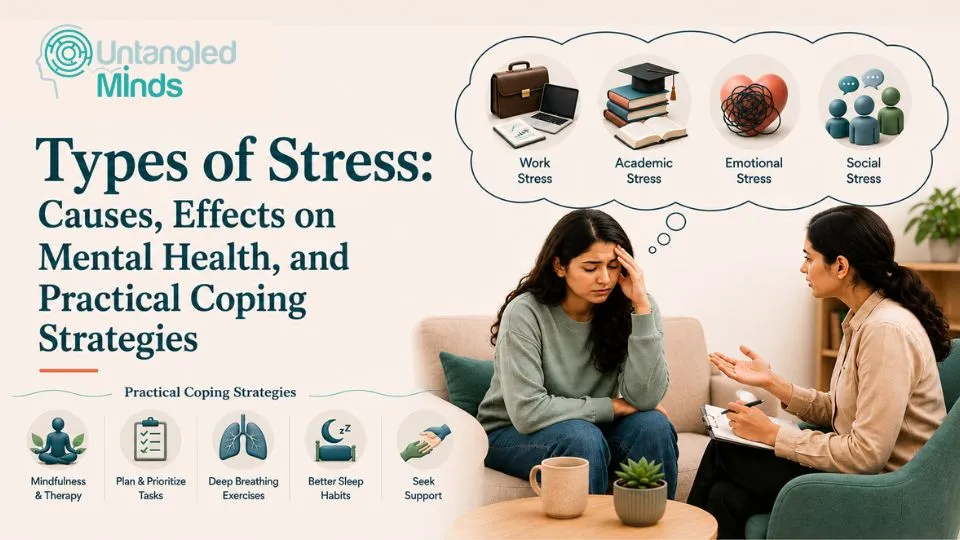
Stress has become such a common part of daily life that most of us don’t think twice before saying, “I’m so stressed.”
Sometimes it’s because of work. Sometimes it’s family responsibilities, exams, finances, or health concerns. And sometimes, we can’t even point to one specific reason. We just know that we’re feeling overwhelmed.
As a Clinical Psychologist, one thing I’ve noticed is that many people don’t seek help because they think stress is “just part of life.” While that’s partly true, there’s an important difference between stress that’s temporary and stress that’s slowly affecting your emotional and physical wellbeing.
Understanding the types of stress is the first step towards recognising when it’s time to pause, take care of yourself, and ask for support if you need it.
What Is Stress?
Stress is your mind and body’s natural response to a challenge, demand, or change.
Whenever your brain senses that something needs your attention, it prepares your body to respond. Your heart may beat faster. Your breathing may change. You become more alert and focused.
This is often called the “fight, flight, or freeze” response, and it’s completely normal.
Stress Isn’t Always a Bad Thing
One of the biggest myths about stress is that it’s always harmful.
It isn’t.
Think about the last time you had an important presentation, a job interview, or an exam. Feeling slightly nervous probably helped you prepare, stay focused, and perform better.
That’s healthy stress.
The problem begins when your body stays in that state for far longer than it should.
Instead of helping you cope, stress starts draining your energy.
You may feel tired even after sleeping well. Small issues can start to seem overwhelming. You may feel more easily frustrated, have less patience, or struggle to stay focused.
When stress starts affecting your daily life, it’s worth paying attention.
Why Understanding Stress Matters
Stress doesn’t only affect your thoughts.
It affects your body, your relationships, your work, and even the way you make decisions.
I’ve had people tell me,
“I thought I was just tired.”
Others say,
“I didn’t realise how stressed I was until I started snapping at everyone around me.”
Sometimes the signs are subtle.
Other times, they become impossible to ignore.
Recognising those signs early often makes stress much easier to manage.
The Different Types of Stress
Not all stress feels the same.
Certain types may last just a few minutes, while others can persist for several months or even years.
Understanding these different forms of stress can help you identify what you’re experiencing and why you may be feeling the way you do.
Acute Stress
Acute stress is the most common type of stress.
It appears suddenly in response to a challenging situation and usually settles once that situation has passed.
You might experience acute stress before:
- A job interview
- An important exam
- Speaking in front of a group
- Waiting for medical test results
- A difficult conversation
You may notice your heart racing, sweaty palms, or thoughts like, “What if I get this wrong?”
Although it can feel uncomfortable, acute stress is usually temporary. Once the situation is over, your mind and body gradually return to their usual state.
Chronic Stress
Unlike acute stress, chronic stress doesn’t disappear after a stressful day.
It stays.
It often develops when someone is dealing with ongoing work pressure, financial difficulties, relationship conflict, caregiving responsibilities, or long-term health concerns.
I’ve had many people sit across from me and say,
“I honestly can’t remember the last time I felt relaxed.”
That’s often how chronic stress feels.
Instead of responding to one challenge, your mind remains on high alert for weeks, months, or even years. Over time, this can affect both your physical health and emotional wellbeing.
Understanding the difference between acute stress and chronic stress is important because each requires a different approach to coping and recovery.
Episodic Acute Stress
Some people experience acute stress over and over again.
It can feel like life is one constant rush.
There’s always another deadline, another responsibility, another problem waiting to be solved.
People experiencing episodic acute stress often describe themselves as feeling “constantly on edge.” Even when one stressful situation ends, another quickly takes its place.
Over time, this pattern can become exhausting and may begin affecting both mental and physical health.
Recognising this cycle is often the first step towards breaking it.
What Causes Stress?
Stress looks different for everyone.
A situation that feels manageable for one person may feel overwhelming for someone else. That’s because our experiences, personalities, coping styles, and support systems are all different.
Still, there are some common causes of stress that I see regularly in my practice.
Work and Academic Pressure
Deadlines, long working hours, job uncertainty, exams, and high expectations can all contribute to stress.
Many people feel like they’re constantly trying to keep up, with very little time to slow down or recover.
Relationships and Family Responsibilities
Arguments with a partner, parenting challenges, caring for ageing parents, or family conflict can be emotionally draining.
Even positive life events, such as getting married or welcoming a new baby, bring changes that can feel stressful.
Financial Worries
Money is one of the most common sources of long-term stress.
Concerns about paying bills, managing debt, or planning for the future can leave people feeling anxious and emotionally exhausted.
Health Concerns and Major Life Changes
Living with a medical condition, recovering from an illness, losing someone close, changing jobs, moving homes, or going through a separation can all place significant emotional demands on us.
Stress isn’t always caused by one major event.
Sometimes it’s the build-up of several smaller pressures that slowly becomes overwhelming.
How Stress Affects Your Mind and Body
Many people think stress is “all in the mind.”
It isn’t.
Stress affects the entire body. That’s why emotional stress can sometimes look like a physical health problem.
Emotional Stress Symptoms
Everyone experiences stress differently, but some of the most common emotional stress symptoms include:
- Feeling anxious or constantly worried
- Becoming easily irritated or frustrated
- Feeling emotionally overwhelmed
- Difficulty concentrating
- Low motivation
- Feeling mentally exhausted
You may also find yourself overthinking situations or reacting more strongly than you normally would.
These reactions don’t mean you’re weak. They’re often signs that your mind has been under pressure for too long.
Physical Effects of Stress
Stress can also affect your body in many ways.
You might notice:
- Frequent headaches
- Muscle tension
- Stomach discomfort
- Changes in appetite
- Poor sleep
- Feeling tired even after resting
When stress continues for a long time, it may also increase the risk of conditions such as high blood pressure, heart disease, digestive problems, and a weakened immune system.
That’s why understanding the effects of stress on health is so important.
Your mind and body are constantly communicating with each other.
How Stress Affects Mental Health
Stress and mental health are closely connected.
Short-term stress is a normal part of life and usually settles once the situation improves.
Long-term stress is different.
When the brain stays in a constant state of alertness, it becomes harder to relax, think clearly, or regulate emotions. Over time, ongoing stress may contribute to anxiety, low mood, burnout, or make existing mental health concerns feel more intense.
I’ve had many people tell me,
“I thought I was just stressed, but now I don’t feel like myself anymore.”
That’s often the point where stress has begun affecting more than just one area of life.
Recognising how stress affects mental health early allows you to take action before it becomes more difficult to manage.
When Should You Seek Help?
Everyone experiences stress.
The question isn’t whether you feel stressed. It’s whether stress has started taking over your life.
It may be time to seek professional support if:
- You feel overwhelmed most days.
- Stress is affecting your work or studies.
- You’re withdrawing from family or friends.
- You’re finding it difficult to sleep or relax.
- You’re relying on alcohol, food, or other unhealthy ways to cope.
- You no longer enjoy activities you once looked forward to.
Many people wait until they’re completely exhausted before asking for help.
You don’t have to wait for things to reach that point.
Sometimes, talking to a mental health professional early can prevent stress from becoming much harder to manage later.
Stress Management Techniques That Really Help
One of the biggest myths about stress is that it disappears on its own.
Sometimes it does, especially if it’s linked to a short-term situation. But when stress has been building for weeks or months, it’s important to actively manage it.
The good news is that you don’t need to change your entire life overnight. Small, consistent changes often make the biggest difference.
Learn to Recognise Your Triggers
The first step is becoming aware of what’s causing your stress.
Ask yourself:
- When do I feel most overwhelmed?
- Is there a particular situation, person, or responsibility that’s affecting me?
- Am I trying to do too much without giving myself time to rest?
Once you identify your triggers, it becomes much easier to decide what needs to change.
Take Care of Your Body
Your mind and body are closely connected.
Simple habits like getting enough sleep, eating regular meals, staying physically active, and limiting excessive caffeine or alcohol can make a noticeable difference to how you cope with stress.
These habits won’t remove every stressful situation, but they can make you more resilient when challenges arise.
Make Time to Slow Down
Many people feel guilty about taking breaks.
They tell themselves, “I’ll rest once everything is done.”
The problem is that everything is rarely done.
Even ten or fifteen minutes each day to pause, go for a walk, practise deep breathing, listen to music, or simply sit quietly can help your mind reset.
Challenge Unhelpful Thoughts
When we’re stressed, our thoughts often become more negative.
You may catch yourself thinking:
“I can’t handle this.”
“Everything is going wrong.”
“Nothing will ever change.”
Instead of accepting these thoughts as facts, try asking yourself whether there’s another way of looking at the situation.
Sometimes changing your perspective can reduce the intensity of stress.
Stay Connected
Stress often makes people withdraw from others.
Ironically, that’s usually when support is needed the most.
Talking to someone you trusta family member, friend, or mental health professionalcan help you feel less alone and more able to cope.
One conversation may not solve the problem, but it can make the burden feel lighter.
Coping Strategies for Stress
There isn’t one coping strategy that works for everyone.
The best approach is usually a combination of small habits that fit naturally into your daily life.
Some effective coping strategies for stress include:
- Practising mindfulness or meditation
- Deep breathing exercises
- Regular physical activity
- Keeping realistic expectations of yourself
- Breaking large tasks into smaller, manageable steps
- Spending time with supportive people
- Setting healthy boundaries
- Making time for hobbies and relaxation
- Seeking professional help when stress becomes difficult to manage
You don’t need to use every strategy.
Even choosing one or two and practising them consistently can make a meaningful difference.
Conclusion
Stress is a normal part of being human.
Every one of us experiences it at different stages of life. The goal isn’t to eliminate stress completely, it’s to recognise when it’s becoming too much and learn healthier ways of responding to it.
Understanding the types of stress, recognising the causes of stress, and noticing the early emotional stress symptoms can help you take action before stress begins affecting your wellbeing.
If you’ve been feeling overwhelmed for some time, remember that you don’t have to manage everything on your own.
At Untangled Minds, I work with adolescents, adults, and families to understand what’s contributing to their stress and help them develop practical, sustainable coping skills. Therapy isn’t about removing every challenge from your life. It’s about helping you respond to those challenges with greater clarity, confidence, and resilience.
If you’re looking for support with stress, anxiety, or other emotional concerns, I offer both in-person sessions in Mumbai and online therapy for individuals across India.
Sometimes the first step isn’t changing your circumstances.
It’s understanding yourself a little better.
Frequently Asked Questions
Can Stress Affect Physical Health?
Yes.
Long-term stress can contribute to headaches, digestive problems, muscle tension, poor sleep, high blood pressure, and reduced immunity. Looking after your mental wellbeing is also an important part of looking after your physical health.
Is All Stress Unhealthy?
No.
Short-term stress can actually help you stay focused, motivated, and prepared for challenges.
It’s when stress becomes frequent, intense, or long-lasting that it starts affecting your wellbeing.
What’s the Difference Between Acute Stress and Chronic Stress?
Acute stress is short-term and usually settles once the stressful situation has passed.
Chronic stress continues for weeks or months and often develops because of ongoing pressures such as work, financial concerns, health issues, or relationship difficulties.
When Should I See a Psychologist for Stress?
Consider seeking support if stress is affecting your sleep, relationships, work, physical health, or overall quality of life.
You don’t need to wait until you’re completely overwhelmed. Early support often makes recovery much easier.