
We’ve all had days when we’ve felt low.
Maybe something didn’t go as planned. Work became overwhelming, a relationship felt difficult, or you simply woke up feeling emotionally drained. Those experiences are part of being human, and most of us recover with a little time, rest, or support.
Depression is different.
As a Clinical Psychologist, one of the biggest misconceptions I come across is that depression is “just sadness.” In reality, it affects much more than your mood. It can change the way you think, feel, behave, and even how your body functions, making everyday tasks feel far more difficult than they used to.
Another misconception is that depression appears overnight.
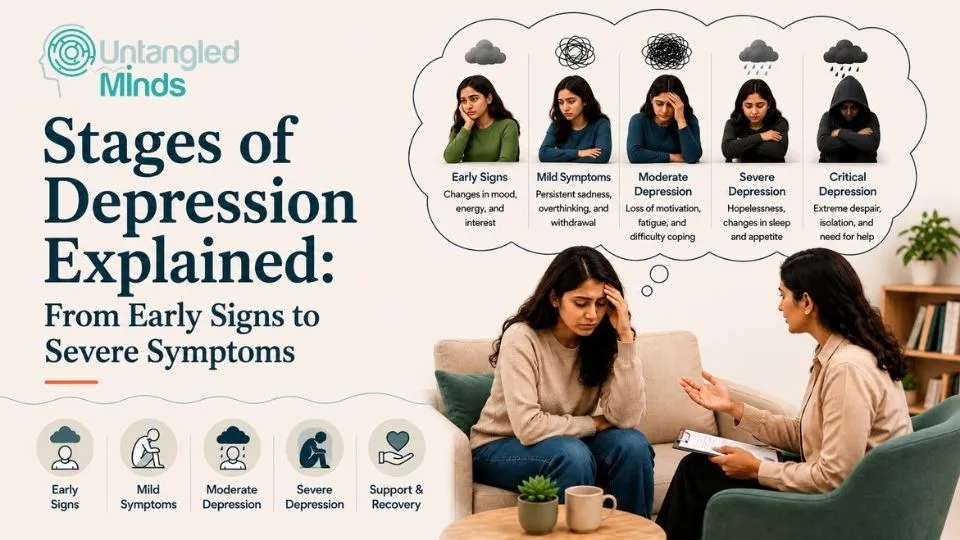
For most people, it doesn’t. The changes usually happen gradually, and they’re often so subtle in the beginning that they’re easy to dismiss. Understanding the stages of depression can help you recognise those early changes and seek support before they begin affecting every area of your life.
What Is Depression?
Depression is a mental health condition that affects the whole person, not just their emotions.
It can influence your thoughts, energy levels, motivation, sleep, appetite, relationships, confidence, and ability to cope with everyday responsibilities. Unlike sadness, which usually eases with time or after a situation changes, depression tends to linger and gradually affect different parts of daily life.
It’s More Than “Feeling Sad”
People often use the words sad and depressed as though they mean the same thing, but they don’t.
Feeling sad is a normal emotional response to life’s ups and downs. Depression is much more persistent and doesn’t simply disappear because something positive happens.
Many people describe it as carrying an invisible weight.
One client explained it beautifully by saying, “It’s like carrying a heavy backpack everywhere I go. I can still keep walking, but everything feels harder.”
That experience may look different from one person to another, but many people relate to the feeling of moving through life while carrying an emotional burden that nobody else can see.
Depression Isn’t a Sign of Weakness
One of the hardest parts of depression is that people often blame themselves for it.
They may think, “I should be able to get over this,” or “Perhaps I’m just not putting in enough effort.”
These thoughts are incredibly common, but they aren’t true.
Depression isn’t a character flaw, and it certainly isn’t a sign of weakness. It’s a genuine mental health condition that deserves the same understanding, compassion, and treatment as any other health condition.
Depression Doesn’t Look the Same for Everyone
If there’s one thing I’d like more people to understand, it’s this: depression doesn’t have one “look.”
Some people cry often, while others hardly cry at all. Some struggle to get out of bed, whereas others continue going to work every day, looking after their families, and appearing perfectly fine to everyone around them.
It’s not unusual for people to say, “Nobody knew what I was going through.”
That’s because many people become very good at hiding their struggles, even from those closest to them.
Looking “okay” on the outside doesn’t always mean someone is okay on the inside.
Understanding the Stages of Depression
Depression rarely develops all at once.
More often, it unfolds gradually. Small changes begin to appear, and because they’re easy to explain away, they often go unnoticed in the beginning. You might blame stress, a busy schedule, poor sleep, or a difficult few weeks.
Over time, however, those changes become more frequent and begin affecting the way you think, feel, and function.
There Isn’t One Fixed Timeline
Not everyone experiences depression in the same way, and there isn’t one timeline that applies to everyone.
Some people notice changes over a few weeks. For others, the symptoms build so slowly that it’s difficult to recognise when things started changing.
Rather than thinking of the stages of depression as strict categories, it’s more helpful to think of them as a gradual progression. Recognising those early changes can make it easier to seek support before symptoms become more severe.
Early Signs of Depression
The early signs of depression often don’t seem dramatic.
In fact, they’re commonly mistaken for stress, burnout, or simply having a difficult phase. That’s one reason many people wait longer than they need to before reaching out for help.
Losing Interest in Things You Once Enjoyed
One of the earliest changes is losing interest in activities that once brought you happiness.
You may stop meeting friends as often, lose interest in hobbies, or no longer feel excited about weekends, holidays, or social events. It’s not that you don’t want to enjoy these thingsthey simply don’t bring the same sense of pleasure they once did.
Feeling Constantly Tired
This isn’t the kind of tiredness that disappears after a good night’s sleep.
Many people describe feeling physically and emotionally exhausted, even after resting. Everyday tasks that once felt routine can suddenly require much more effort, leaving you wondering why everything feels so difficult.
Becoming More Withdrawn
Some people naturally pull away from others when they’re struggling.
You may find yourself cancelling plans, avoiding phone calls, or choosing to spend more time alone. Often, it isn’t because you don’t care about the people around you. It’s because socialising starts to feel emotionally draining.
Finding It Hard to Concentrate
Depression can also affect the way your brain processes information.
You may notice yourself reading the same paragraph repeatedly, forgetting simple things, struggling to make decisions, or finding it difficult to stay focused at work. Many people assume they’re becoming lazy or less capable, when in reality these changes are common symptoms of depression.
Feeling Hopeless or More Self-Critical
Another early change is the way you begin talking to yourself.
You may become much more critical of your mistakes, lose confidence in your abilities, or start believing that nothing is ever going to improve. These thoughts can feel very convincing, but they’re often being shaped by depression itself rather than by reality.
Recognising these depression warning signs doesn’t mean you’ll automatically develop severe depression. It simply means your mind may be asking for attention and support. The earlier you respond to those signs, the easier it often becomes to begin the journey towards recovery.
How Depression Progresses
Depression doesn’t usually stay the same over time.
For some people, the symptoms remain relatively mild and come and go. For others, they gradually become more intense, making it harder to manage work, relationships, or even everyday responsibilities. Exactly how depression progresses is different for everyone, which is why it’s important not to compare your experience with someone else’s.
The important thing is to notice when the changes begin affecting your quality of life.
The Emotional Stages of Depression
Depression often changes the way people feel long before it changes what others can see.
These emotional stages of depression don’t always happen in a fixed order, but many people describe experiences that are surprisingly similar.
Feeling Emotionally Numb
People often assume depression means feeling sad all the time.
Sometimes that’s true. But just as often, people describe feeling emotionally “flat.”
One statement I hear frequently is, “I’m not happy, but I’m not really feeling much of anything either.”
Activities that once brought excitement or comfort may begin to feel meaningless, and even positive events don’t create the same emotional response they once did.
Becoming More Self-Critical
Depression also changes the way people see themselves.
Small mistakes may begin to feel much bigger than they really are. You might focus only on what went wrong, overlook your achievements, or feel that you’re constantly falling short, even when others reassure you that you’re doing well.
Over time, confidence can gradually begin to fade.
Losing Hope
As depression becomes more severe, it’s common to feel that things are unlikely to improve.
People sometimes tell me, “I know everyone says this will pass, but I can’t imagine feeling better.”
That’s one of the most difficult parts of depression. It doesn’t just affect how you feel todayit changes the way you see tomorrow.
Symptoms of Depression
The symptoms of depression affect much more than mood.
They can influence your emotions, your thinking, your behaviour, and your physical health. Not everyone experiences the same symptoms, but recognising them early can make it easier to seek help.
Emotional Symptoms
Some of the most common emotional symptoms include:
- Ongoing feelings of sadness or a consistently low mood
- A reduced interest in hobbies or activities that once brought you enjoyment
- Feeling empty, hopeless, or numb
- Increased irritability or frustration
- Feeling guilty, worthless, or like a burden
- Crying more often than usual, or sometimes not being able to cry at all
These feelings tend to last much longer than ordinary sadness and often don’t improve simply because circumstances change.
Changes in Thinking
Depression can also affect the way you think.
You may find it harder to concentrate, make decisions, remember information, or stay motivated. Some people describe feeling as though their mind has “slowed down,” making even simple decisions feel exhausting.
These difficulties are a recognised part of depression, not a sign that you’re becoming less capable.
Changes in Behaviour
Behaviour often changes too, although these changes aren’t always obvious to other people.
You may begin withdrawing from family and friends, stop exercising, lose interest in hobbies, or struggle to keep up with household responsibilities.
Sometimes people continue doing everything they’re expected to do, but it takes far more emotional energy than anyone around them realises.
The Physical Effects of Depression
Depression doesn’t only affect the mind.
Many people experience physical effects of depression long before they realise their emotional wellbeing is being affected.
Changes in Sleep
Sleep is one of the first things many people notice changing.
Some find themselves sleeping much longer than usual but still waking up exhausted. Others struggle to fall asleep, wake frequently during the night, or wake much earlier than they intend to.
Either way, restful sleep often becomes difficult.
Changes in Appetite
Appetite can also change significantly.
Some people lose interest in food altogether, while others find themselves eating more than usual, often looking for comfort during difficult moments.
Both experiences are common.
Constant Fatigue
Feeling tired is one thing.
Depression-related fatigue is something very different.
People often describe feeling drained before the day has even begun. Everyday tasks like showering, cooking, replying to messages, or getting dressed can suddenly feel much more difficult than they used to.
Physical Aches and Pains
Depression may also contribute to headaches, muscle tension, digestive problems, or general body aches.
Because these symptoms are physical, many people initially seek medical help without realising that their emotional health may also need attention.
Types of Depressive Disorders
When people hear the word “depression,” they often assume it’s one condition.
In reality, there are different types of depressive disorders, and each person’s experience is unique.
Major Depressive Disorder
This is the type of depression that most people commonly recognize.
Symptoms are significant enough to affect daily life, including work, relationships, and the ability to manage everyday activities.
Persistent Depressive Disorder
Sometimes called dysthymia, this is a longer-lasting form of depression.
The symptoms may feel less intense than major depression, but they continue for an extended period, often two years or more. Because the changes happen gradually, some people begin believing that feeling this way is simply part of who they are.
Seasonal Affective Disorder (SAD)
Some people notice their mood changes during certain times of the year, particularly during the winter months when there’s less natural sunlight.
For them, symptoms improve as the seasons change.
Postpartum Depression
Some women experience depression after giving birth.
This is much more than the temporary “baby blues.” It can significantly affect emotional wellbeing, daily functioning, and the ability to care for themselves or their baby, making early support especially important.
Whatever the diagnosis, one message remains the same.
Depression can be managed with effective treatment, and many people can recover with appropriate support and care.
Severe Depression Symptoms
Depression can vary in intensity and presentation, and each person may experience it differently.
For some people, the symptoms remain mild and manageable. For others, they gradually become more intense and begin affecting almost every aspect of daily life. This progression can happen slowly, which is one reason people sometimes don’t realise how much they’re struggling until everyday activities start feeling overwhelming.
Recognising severe depression symptoms early is important because timely support can make a significant difference.
Feeling Completely Hopeless
One of the most concerning symptoms of severe depression is a deep sense of hopelessness.
People often describe feeling as though nothing will ever improve, no matter what they do. They may stop making plans for the future because they genuinely believe things won’t get better.
Depression has a way of changing perspective. It can make temporary problems feel permanent and convince people that there’s no way forward, even when help is available.
Everyday Tasks Become Difficult
As depression becomes more severe, even simple tasks can require enormous effort.
Getting out of bed, taking a shower, preparing a meal, replying to messages, or going to work may suddenly feel exhausting.
People often blame themselves for becoming “lazy.”
In reality, this loss of energy and motivation is a recognised symptom of depression, not a lack of willpower.
Withdrawing From Other People
Depression often causes people to pull away from those around them.
They may cancel plans, avoid phone calls, or stop responding to messages altogether. Friends and family sometimes misunderstand this as a lack of interest, when it’s often a sign that the person is struggling emotionally.
Isolation can make depression feel even heavier, which is why staying connected to supportive people is so important.
Thoughts of Self-Harm or Suicide
In some cases, depression may lead to thoughts of self-harm or suicide.
These thoughts should always be taken seriously, whether they’re expressed directly or through comments such as, “Everyone would be better off without me,” or “I don’t want to do this anymore.”
If you or someone close to you is having these thoughts, it is important to reach out to a mental health professional as soon as possible. You do not have to go through this experience by yourself, and help and support are available.
Depression Warning Signs You Shouldn’t Ignore
Many people hope their symptoms will simply disappear with time.
Sometimes they do, particularly if they’re linked to a temporary period of stress. However, if you’ve noticed several depression warning signs lasting for two weeks or more, it’s important not to ignore them.
These warning signs may include:
- Feeling low or emotionally numb most days
- Losing interest in activities you once enjoyed
- Ongoing tiredness or lack of energy
- Changes in sleep or appetite
- Difficulty concentrating or making decisions
- Withdrawing from family and friends
- Feeling guilty, hopeless, or worthless
You don’t need to experience every symptom before seeking support.
If your emotional wellbeing is affecting your daily life, it’s okay to ask for help.
When Should You Seek Professional Help?
One of the biggest barriers to treatment is believing that your symptoms aren’t “serious enough.”
I’ve heard people say,
“Other people have it much worse than I do.”
“I should be able to deal with this on my own.”
The truth is, you don’t have to wait until you’re at your lowest point before reaching out.
If depression is affecting your work, relationships, studies, sleep, physical health, or overall quality of life, speaking to a mental health professional can help you understand what’s happening and what support may be most appropriate.
Early intervention often prevents symptoms from becoming more severe and makes recovery easier.
Can Depression Be Treated?
Yes.
Depression is one of the most treatable mental health conditions, and many people recover with the right combination of support.
Treatment depends on the individual and may include psychological therapy, medication, lifestyle changes, or a combination of these approaches.
In therapy, we don’t just focus on reducing symptoms.
We work together to understand what’s contributing to the depression, identify unhelpful thinking patterns, strengthen coping skills, improve emotional resilience, and help you reconnect with the parts of life that matter to you.
Recovery isn’t always a straight line.
Some days may feel easier, while others may be more challenging, and that is a normal part of the process. Progress usually comes slowly, through consistent small steps over time.
Conclusion
Depression rarely begins with one dramatic moment.
More often, it starts with small changes that are easy to dismiss a loss of interest in things you once enjoyed, feeling constantly tired, becoming more withdrawn, or struggling to cope with everyday life.
Understanding the stages of depression, recognising the early signs of depression, and knowing when to seek help can make a meaningful difference. Seeking support at an early stage can improve the likelihood of recovery.
If you’ve recognised yourself, or someone you care about, in the experiences described in this article, please remember that depression is not a sign of weakness, and it isn’t something you have to face alone.
At Untangled Minds, I work with adolescents and adults experiencing depression, anxiety, stress, and other emotional difficulties. Together, we explore what’s contributing to those struggles and develop practical, evidence-based strategies that support recovery and long-term emotional wellbeing.
Reaching out for support does not mean that you have failed or stopped trying.
It’s often the first step towards feeling like yourself again.
Frequently Asked Questions
Can Depression Go Away on Its Own?
Mild symptoms may improve if they’re linked to a temporary life event. However, if symptoms last for more than two weeks or continue affecting your daily life, it’s important to seek professional support.
Is Depression the Same as Feeling Sad?
No.
Sadness is a normal emotion that usually changes with time or circumstances. Depression is a mental health condition that affects emotions, thoughts, behaviour, and physical wellbeing for a much longer period.
Can Someone Have Depression and Still Function Normally?
Yes.
Many individuals continue to manage their work, education, or family responsibilities while experiencing depression. A person may seem like they are handling things well on the outside, but that does not mean they are not facing difficulties internally.